Stationary and waved yellow are not the same instruction
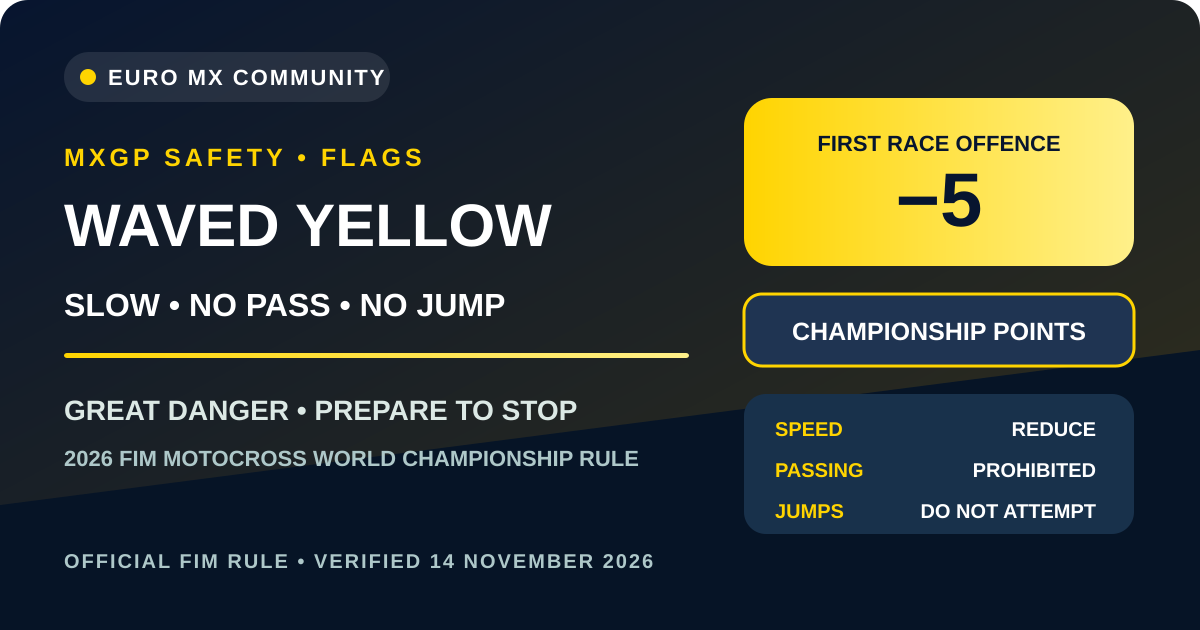
The 2026 FIM rulebook uses a stationary yellow flag for danger with a requirement to ride cautiously. A waved yellow is the stronger signal: great danger, prepare to stop and no overtaking. The waved flag takes precedence over the stationary one.
A visible speed reduction is mandatory
Under a waved yellow, riders must show a significant reduction in speed. The same instruction says jumps should not be attempted. It is therefore not enough to keep the throttle open while merely avoiding a pass.
The medical flag creates a stricter controlled zone
When medical staff are on the track, the medical flag is superior to both yellow signals. Riders must proceed with extreme caution, roll every jump individually and neither accelerate nor overtake until they pass the area of concern and the green flag, when one is displayed.
MXGP race penalties come from the championship table
For MXGP, MX2 and WMX qualifying races or races, a first flag offence during the event removes five championship points. Every additional offence at that event removes ten points. The deduction is applied to the World Championship standings after the event, up to the points the rider holds.
Practice and other FIM motocross classes use different sanctions
In MXGP, MX2 and WMX practice, a first offence drops the rider two positions and each additional offence drops ten. Motocross of Nations and Junior World Championship sanctions are expressed differently, so the five-point race rule should not be copied across every FIM motocross category.
Facts are frozen to the verification date shown above. Any later correction will be added visibly.
Primary source checked internally: FIM official 2026 Motocross World Championships Regulations, articles 4.12 and 4.26; edition updated 18 February 2026 and checked 14 November 2026.