Recording and transmitting are separate under the rule
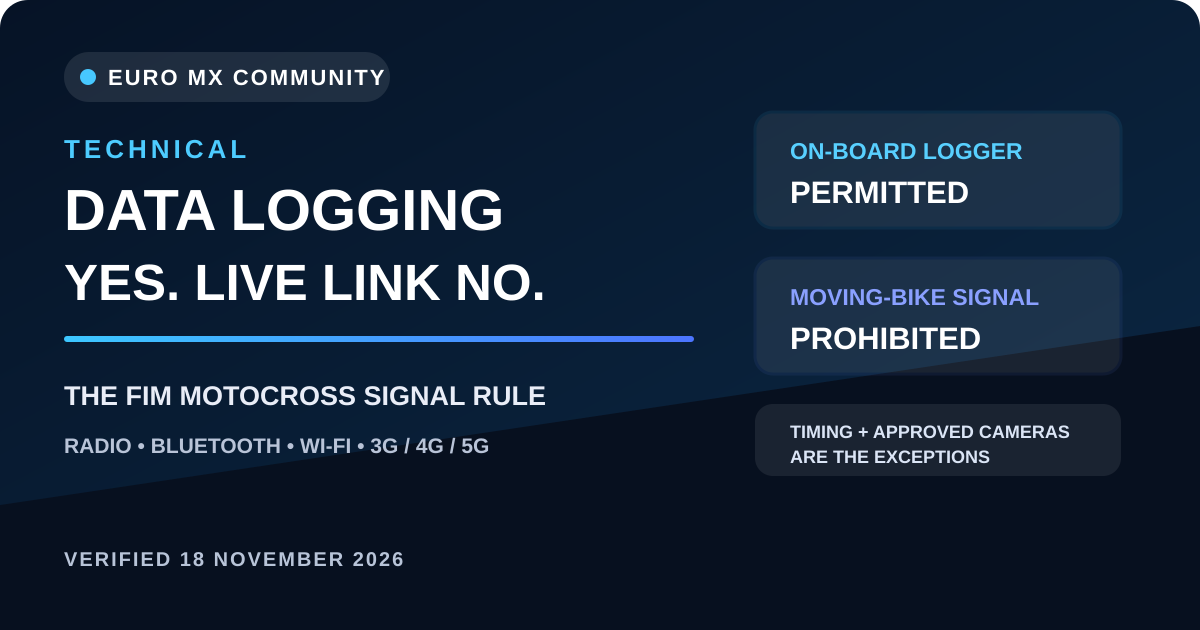
Article 25.05 of the 2026 FIM Motocross Technical Regulations authorises data-recording devices and automatic electronic ignition. The same article then draws a firm boundary around communication while the motorcycle is moving.
Live signals to the pits are prohibited
No signal may pass between a moving motorcycle and any person or device. The FIM wording expressly includes radio, Bluetooth, Wi-Fi and 3G, 4G or 5G communication, so a logger may retain information on the bike without becoming a live telemetry link.
Timing and approved cameras are narrow exceptions
The rule excludes the timekeeping transponder and automatic lap-timing devices from the signal ban. Approved on-board cameras are also excepted, but only with prior written approval from the championship promoter or organiser. A camera is therefore not automatically authorised simply because it is attached to the motorcycle.
FIM control hardware must still be accepted
The Technical Director may impose electronic devices for testing and control, including sensors, wiring, loggers or transponders. Teams must fit and cooperate with those official checks, which is different from a team creating its own live data connection.
One sensor receives its own direct ban
Article 25.05.01 separately forbids wheel-speed sensors. This explainer follows the current world-level FIM technical code checked on 18 November 2026; national championships and individual events can publish additional requirements in their own regulations.
Facts are frozen to the verification date shown above. Any later correction will be added visibly.
Primary source checked internally: FIM official 2026 Motocross Technical Regulations, articles 25.05 and 25.05.01, version 1 applicable from 1 August 2026; checked 18 November 2026.