Classic Enduro is competition, not static display
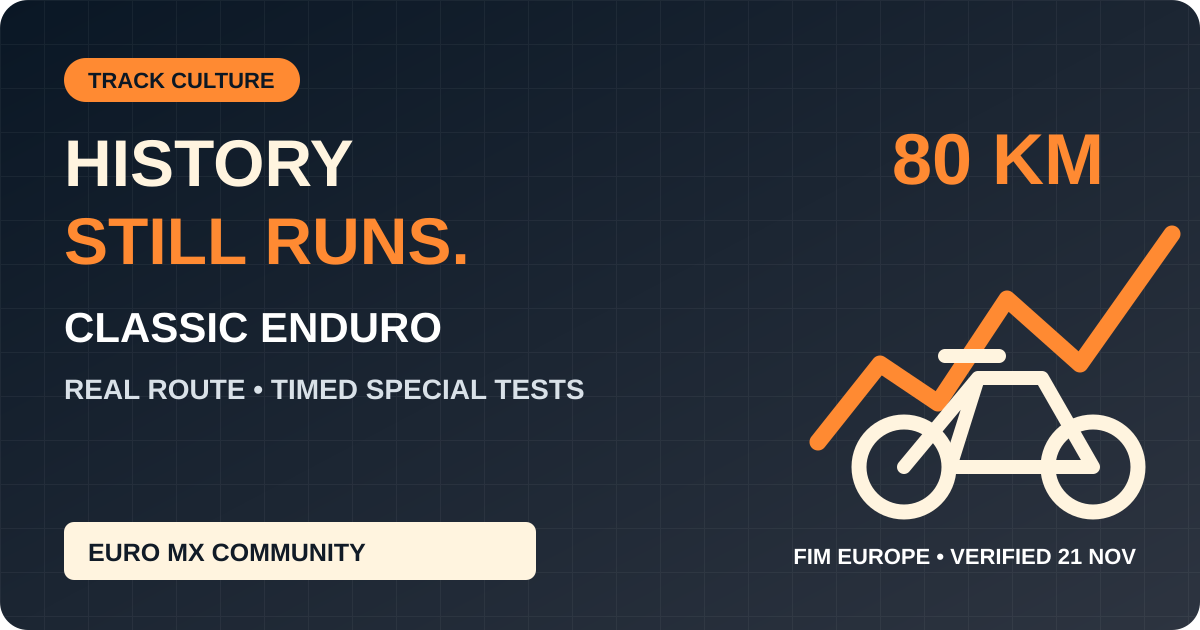
FIM Europe describes Classic Enduro as the place where historic motorcycles return to the environment for which they were designed. The machines are not limited to demonstration laps: riders complete a route, contest timed special tests and score championship points in defined age and capacity groups.
Marcolès combined distance with timed precision
The 2026 season finale in Marcolès, France, used approximately 80 kilometres of riding and two special tests. That structure preserves the two demands at the heart of enduro: managing the wider route and then producing outright speed when the clock starts.
Three countries built the 2026 route
The championship opened at Terrasini in Italy, moved to Piekoszów in Poland and finished in central France. The three-round map placed old machinery on different terrain rather than asking one circuit or one national scene to define the entire European season.
Classes keep different eras and capacities meaningful
FIM Europe awards titles across Expert, Classic and Open groups, then separates motorcycles by capacity bands such as up to 125cc, up to 250cc and over 250cc where applicable. That prevents one broad historic field from hiding the mechanical differences between lightweight and larger-capacity machines.
The culture comes from using the bikes as intended
Classic Enduro connects preservation with active riding. Preparation, mechanical sympathy and route craft matter because the motorcycles must still cover real ground before the result is decided in the tests. This explainer stays focused on FIM Europe’s official format and culture and uses an original in-house text-card without race photography.
Facts are frozen to the verification date shown above. Any later correction will be added visibly.
Primary source checked internally: FIM Europe official 2026 Classic Enduro European Championship finale report, published 11 October and rechecked 21 November 2026.